

14 Sep Coffee’s Next Revolution Is Hospitality / La próxima revolución del café se llama Hospitalidad
Coffee’s Next Revolution Is Hospitality
Specialty coffee is already a $111.5 billion market, with 72.4% of its value generated away from home. The World’s 100 Best Coffee Shops wants to turn hospitality into one of the key drivers of the industry’s next decade of growth.
The global specialty coffee market has reached a scale that would have been difficult to imagine only a few years ago. According to Grand View Research, it was worth approximately $111.5 billion in 2025 and is expected to reach $122.7 billion in 2026. By 2033, it could exceed $251 billion, representing projected annual growth of 10.8%.
The speed of that growth matters, but there is another figure that tells an even more interesting story. In 2025, 72.4% of the value of the global specialty coffee market was generated away from home, representing approximately $80.9 billion.
Specialty coffee, in other words, is not simply changing what people drink. It is changing where and how they experience coffee.
That evolution has been decades in the making. Producers have improved varieties, agricultural practices and processing. Roasters have developed an increasingly sophisticated understanding of sourcing and roasting. Baristas have become highly skilled professionals. Technology has brought greater precision and consistency to preparation, while consumers have become increasingly curious about origin, flavour and the people behind their coffee.
The Specialty Coffee Association (SCA) has played an important role in that transformation. Through education, research, standards and professional development, the SCA and its predecessor organisations helped establish a common international language around coffee quality and build a global professional community. Its educational network now reaches tens of thousands of learners across almost 90 countries every year.
The industry has spent decades learning how to produce, evaluate, roast and prepare better coffee. As the market grows, however, another question becomes increasingly important: what happens when all that work finally reaches the consumer?
From Coffee Quality to Coffee Experience
The answer increasingly lies in hospitality.
A great coffee can begin thousands of kilometres away, on a farm where decisions about variety, soil, harvesting and processing determine its potential. That value is then carried forward by exporters, importers, roasters, equipment, technology and the knowledge of the barista.
But none of those elements automatically creates a great consumer experience. That happens at the final point of contact.
The coffee shop is where the producer’s work becomes something a consumer can taste and understand, where the roaster’s decisions become a cup, where technical knowledge becomes consistency and where the barista’s expertise becomes service and conversation.
This is why hospitality should not be seen as something added to coffee after the important work has already been done. It is the final expression of that work, and the point at which the accumulated value of the entire chain becomes visible to the consumer.
The growing importance of away-from-home consumption reinforces this idea. If almost three quarters of the value of specialty coffee is now generated outside the home, then the places serving that coffee are becoming fundamental to the future of the category.
Consumers are looking for quality, but increasingly they are also looking for discovery, knowledge, service, atmosphere, design, food and memorable experiences. Great coffee remains at the centre, but the environment around it determines how that coffee is perceived, understood and remembered.
This is the space in which The World’s 100 Best Coffee Shops was created.
Why The World’s 100 Best Coffee Shops
The World’s 100 Best Coffee Shops began with a relatively simple idea: if extraordinary work is happening in coffee shops around the world, we need better ways to find it, recognise it and make it visible.
But the ambition goes beyond identifying the best.
A global recognition platform can also influence what the industry understands excellence to be. By evaluating not only coffee quality but also barista expertise, service, innovation, atmosphere, design, sustainability, food and consistency, The World’s 100 Best Coffee Shops places hospitality alongside coffee quality as an essential part of the conversation.
This does not replace the work already developed by the specialty coffee industry. It builds on it.
The SCA has helped create standards, knowledge and professional culture around coffee. The World’s 100 Best Coffee Shops contributes another perspective: how that excellence is ultimately delivered to the consumer through hospitality.
That distinction matters. Hospitality is a professional discipline of its own. The restaurant and hotel industries have spent decades studying service, customer journeys, atmosphere, consistency and the creation of memorable experiences. Coffee can increasingly benefit from that knowledge.
The opportunity for The World’s 100 Best Coffee Shops is therefore not only to discover excellent coffee shops, but also to help inspire a higher standard of coffee experience. Recognition creates aspiration. Aspiration encourages improvement. And improvement can ultimately benefit the entire value chain.
From One Global List to a Discovery Ecosystem
It quickly became clear that excellence could not be understood through a single global list.
Coffee culture develops differently in Madrid, Copenhagen, Dubai, Riyadh, Tokyo, Bangkok, Melbourne, Bogotá, New York or Cape Town. Each market has its own traditions, maturity, consumers and interpretation of what a contemporary coffee shop can be.
That is why the ecosystem is expanding through The Best Coffee Shops (TBCS), searching country by country for outstanding businesses, emerging concepts and professionals that might otherwise remain outside the international conversation.
The Top 100 continental and regional lists add another dimension, allowing the distinctive coffee cultures of Europe, Asia, Africa, Oceania, the Middle East and the Americas to gain their own visibility before connecting with the global stage represented by The World’s 100 Best Coffee Shops.
The result is a natural progression from national discovery to continental and regional recognition and, ultimately, global visibility.
This structure can make the ecosystem particularly valuable for emerging coffee markets. A remarkable coffee shop should not need to be located in one of the industry’s traditional capitals to be discovered. If excellent work is happening in a secondary city or a rapidly developing coffee market, the system should be capable of finding it.
Over time, these lists can become more than rankings. Together, they can create an evolving map of where coffee excellence is happening and, equally importantly, what that excellence looks like in different cultures.
An Ecosystem Behind the Experience
No coffee shop creates excellence alone. Behind every great experience is a network of producers, roasters, baristas, equipment manufacturers, technology companies and businesses supplying the modern hospitality environment.
Their contributions are different but complementary. Slayer, for example, reflects the importance of professional training and technical knowledge alongside equipment. Markibar illustrates another essential principle: precision and consistency in grinding, because excellence has little value if it cannot be reproduced throughout the day.
Companies such as Slayer, La Marzocco, Victoria Arduino, Nuova Simonelli, Mahlkönig, Markibar, Cropster and BWT water+more form part of the professional infrastructure that allows coffee shops to deliver increasingly sophisticated experiences. Adjacent categories are becoming part of that evolution too; DaVinci Gourmet, for example, shows how a brand outside coffee itself can contribute to creativity and quality within the wider beverage experience.
The point is not the size of these companies, or even whether coffee is their core business. What matters is how each participant contributes to making the final experience better.
The same principle should apply to roasters. Small independent roasters, medium-sized businesses and major international coffee companies can all contribute to raising standards. Excellence should not be determined by size; it should be demonstrated through quality, consistency, innovation and the value ultimately delivered to the consumer.
The Journey Should Lead Back to Origin
There is, however, one risk in focusing on the coffee shop experience: forgetting where all of this begins.
If hospitality is going to be at the service of the entire coffee value chain, then a better consumer experience should ultimately create greater visibility for the people responsible for the coffee itself.
The journey can begin when somebody discovers an outstanding coffee shop. Inside it, they discover a coffee they have never tasted before. That coffee introduces them to a roaster, which introduces them to an origin, a variety, a process and eventually a producer.
In that sense, the coffee shop can become one of the most powerful communication platforms available to origin.
This is the logic behind the next extension of the ecosystem.
The World’s Best Coffee Producers
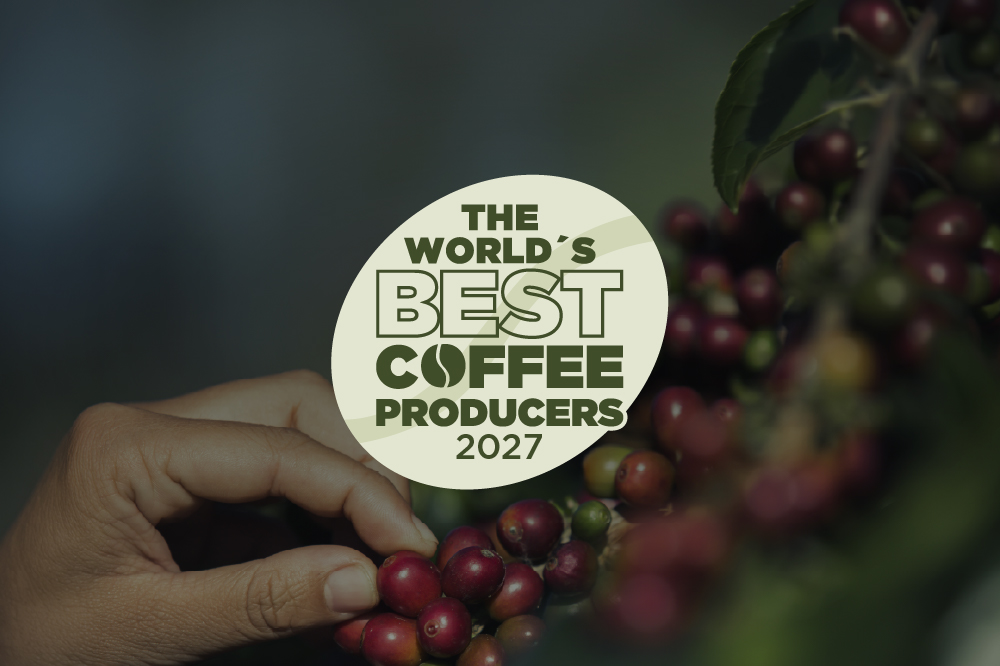
In March 2027, during CoffeeFest Madrid, the first edition of The World’s Best Coffee Producers will take the discovery process back to where coffee begins. The inaugural list will be revealed on 8 March 2027.
Coffee shops, roasters and coffee professionals within The World’s 100 Best Coffee Shops ecosystem will identify producers they believe are particularly well aligned with the direction in which quality coffee is moving.
Coffee quality will naturally be fundamental, but the perspective will be broader. Consistency, innovation, processing expertise, traceability and reliability matter increasingly to professional buyers, as do communication, collaboration and the ability to develop strong B2B and B2C relationships.
This reflects another transformation taking place in coffee. Producers do not necessarily have to remain anonymous suppliers at the beginning of a long chain. They can increasingly build identities and reputations of their own and establish closer relationships with roasters, coffee shops and consumers.
The Federación Nacional de Cafeteros de Colombia provides an interesting example of how origin can engage with this evolution. Colombia has spent decades building one of the world’s most recognisable coffee identities, and the Federation’s work connecting Colombian coffee and its producers with international markets demonstrates the importance of creating bridges between origin, professionals and consumers.
The growth of The World’s 100 Best Coffee Shops ecosystem creates another potential bridge. Coffee shops, roasters, baristas and buyers are precisely the professionals who determine how exceptional coffees are interpreted and presented to the market. Connecting them more closely with producers can allow recognition to travel in both directions: from origin towards the consumer, but also from the consumer-facing side of the industry back towards origin.
Building the Next Layer of Coffee Excellence
Seen together, these initiatives begin to form a coherent ecosystem.
The Best Coffee Shops provides national discovery. The Top 100 continental and regional lists connect excellence across Europe, Asia, Africa, Oceania, the Middle East and the Americas. The World’s 100 Best Coffee Shops provides a global stage, while The World’s Best Coffee Producers extends recognition back towards origin.
Around those platforms sits the industry that has made this evolution possible. The SCA has contributed standards, education, research and professional culture. Producers create quality at origin. Roasters develop and interpret it. Equipment and technology help deliver it consistently. Baristas translate technical knowledge into service, and coffee shops transform all of those elements into experiences consumers can understand and enjoy.
The World’s 100 Best Coffee Shops sits at the intersection of those worlds. Its role can be both to discover excellence and to help create more of it by bringing the principles of hospitality into the conversation around coffee quality.
That becomes increasingly relevant in a market already worth more than $111 billion, expected to approach $123 billion in 2026, growing at a projected rate of almost 11% annually, and with 72.4% of its value generated away from home.
The next chapter of specialty coffee, therefore, may not be defined simply by producing better coffee. The industry has already made extraordinary progress there.
The next opportunity is to ensure that all of that quality, knowledge and work reaches the consumer in the best possible way — and that the experience, in turn, creates greater appreciation and value throughout the chain.
That is the reason for building The World’s 100 Best Coffee Shops ecosystem: to discover where excellence already exists, to encourage new standards of hospitality and experience, and to connect the consumer more closely with the professionals, roasters and producers behind every exceptional cup.
The world’s best coffee shops should not be the end of the coffee value chain. They can become the window through which consumers discover the whole of it — and the place where decades of progress in better coffee become the foundation for something equally important: better coffee experiences.
La próxima revolución del café se llama Hospitalidad
El café de especialidad ya mueve 111.500 millones de dólares y el 72,4% de su valor se genera fuera del hogar. The World’s 100 Best Coffee Shops quiere convertir la hospitalidad en uno de los motores de su próxima década de crecimiento.
The World’s 100 Best Coffee Shops está creando un ecosistema global donde la excelencia cafetera se une a la hospitalidad, conectando a productores, tostadores y profesionales con las mejores cafeterías del mundo y, en última instancia, con el consumidor.
El mercado global del café de especialidad ha alcanzado una escala que hace apenas unos años habría sido difícil de imaginar. Según Grand View Research, en 2025 estaba valorado en aproximadamente 111.500 millones de dólares y se espera que alcance los 122.700 millones de dólares en 2026. Para 2033, podría superar los 251.000 millones de dólares, lo que representa un crecimiento anual proyectado del 10,8%.
La velocidad de ese crecimiento es importante, pero hay otra cifra que cuenta una historia aún más interesante. En 2025, el 72,4% del valor del mercado global de café de especialidad se generó fuera del hogar, lo que representa aproximadamente 80.900 millones de dólares.
El café de especialidad, en otras palabras, no solo está cambiando lo que la gente bebe. Está cambiando dónde y cómo experimenta el café.
Esa evolución se ha ido gestando durante décadas. Los productores han mejorado las variedades, las prácticas agrícolas y el procesamiento. Los tostadores han desarrollado una comprensión cada vez más sofisticada del origen y del tostado. Los baristas se han convertido en profesionales altamente cualificados. La tecnología ha aportado mayor precisión y consistencia a la preparación, mientras que los consumidores han mostrado una curiosidad creciente por el origen, el sabor y las personas detrás de su café.
La Specialty Coffee Association (SCA) ha desempeñado un papel importante en esa transformación. A través de la educación, la investigación, los estándares y el desarrollo profesional, la SCA y sus organizaciones predecesoras ayudaron a establecer un lenguaje internacional común en torno a la calidad del café y a construir una comunidad profesional global. Su red educativa llega hoy cada año a decenas de miles de estudiantes en casi 90 países.
La industria ha pasado décadas aprendiendo a producir, evaluar, tostar y preparar mejor café. Sin embargo, a medida que el mercado crece, otra pregunta cobra cada vez más importancia: ¿qué sucede cuando todo ese trabajo finalmente llega al consumidor?
De la calidad del café a la experiencia del café
La respuesta reside cada vez más en la hospitalidad.
Un gran café puede empezar a miles de kilómetros de distancia, en una finca donde las decisiones sobre variedad, suelo, cosecha y procesamiento determinan su potencial. Ese valor es luego transportado por exportadores, importadores, tostadores, equipos, tecnología y el conocimiento del barista.
Pero ninguno de esos elementos crea automáticamente una gran experiencia para el consumidor. Eso ocurre en el punto final de contacto.
La cafetería es el lugar donde el trabajo del productor se convierte en algo que el consumidor puede saborear y comprender, donde las decisiones del tostador se convierten en una taza, donde el conocimiento técnico se convierte en consistencia y donde la experiencia del barista se convierte en servicio y conversación.
Por eso la hospitalidad no debe entenderse como algo que se añade al café una vez está hecho el trabajo importante. Es la expresión final de ese trabajo, y el punto en el que el valor acumulado de toda la cadena se vuelve visible para el consumidor.
La creciente importancia del consumo fuera del hogar refuerza esta idea. Si casi las tres cuartas partes del valor del café de especialidad se generan ahora fuera de casa, entonces los lugares que sirven ese café se están volviendo fundamentales para el futuro de la categoría.
Los consumidores buscan calidad, pero cada vez más buscan también descubrimiento, conocimiento, servicio, ambiente, diseño, gastronomía y experiencias memorables. El buen café sigue siendo el centro, pero el entorno que lo rodea determina cómo se percibe, se entiende y se recuerda ese café.
Este es el espacio en el que nació The World’s 100 Best Coffee Shops.
Por qué The World’s 100 Best Coffee Shops
The World’s 100 Best Coffee Shops nació de una idea relativamente sencilla: si en cafeterías de todo el mundo está ocurriendo un trabajo extraordinario, necesitamos mejores maneras de encontrarlo, reconocerlo y hacerlo visible.
Pero la ambición va más allá de identificar a los mejores.
Una plataforma de reconocimiento global también puede influir en lo que la industria entiende por excelencia. Al evaluar no solo la calidad del café, sino también la experiencia del barista, el servicio, la innovación, el ambiente, el diseño, la sostenibilidad, la comida y la consistencia, The World’s 100 Best Coffee Shops sitúa la hospitalidad junto a la calidad del café como una parte esencial de la conversación.
Esto no sustituye el trabajo ya desarrollado por la industria del café de especialidad. Lo complementa.
La SCA ha ayudado a crear estándares, conocimiento y cultura profesional en torno al café. The World’s 100 Best Coffee Shops aporta otra perspectiva: cómo esa excelencia llega finalmente al consumidor a través de la hospitalidad.
Esa distinción importa. La hospitalidad es una disciplina profesional en sí misma. Las industrias de la restauración y la hotelería llevan décadas estudiando el servicio, los recorridos del cliente, el ambiente, la consistencia y la creación de experiencias memorables. El café puede beneficiarse cada vez más de ese conocimiento.
Por eso, la oportunidad de The World’s 100 Best Coffee Shops no es solo descubrir cafeterías excelentes, sino también ayudar a inspirar un estándar más alto de experiencia cafetera. El reconocimiento genera aspiración. La aspiración fomenta la mejora. Y la mejora puede, en última instancia, beneficiar a toda la cadena de valor.
De una lista global a un ecosistema de descubrimiento
Pronto quedó claro que la excelencia no podía entenderse a través de una única lista global.
La cultura del café se desarrolla de forma diferente en Madrid, Copenhague, Dubái, Riad, Tokio, Bangkok, Melbourne, Bogotá, Nueva York o Ciudad del Cabo. Cada mercado tiene sus propias tradiciones, su propia madurez, sus propios consumidores y su propia interpretación de lo que puede ser una cafetería contemporánea.
Por eso el ecosistema se está expandiendo a través de The Best Coffee Shops (TBCS), que busca país por país negocios sobresalientes, conceptos emergentes y profesionales que de otro modo podrían quedar fuera de la conversación internacional.
Las listas continentales y regionales Top 100 añaden otra dimensión, permitiendo que las culturas cafeteras distintivas de Europa, Asia, África, Oceanía, Oriente Medio y América ganen su propia visibilidad antes de conectarse con el escenario global que representa The World’s 100 Best Coffee Shops.
El resultado es una progresión natural que va del descubrimiento nacional al reconocimiento continental y regional y, finalmente, a la visibilidad global.
Esta estructura puede resultar especialmente valiosa para los mercados cafeteros emergentes. Una cafetería extraordinaria no debería necesitar estar ubicada en una de las capitales tradicionales de la industria para ser descubierta. Si en una ciudad secundaria o en un mercado cafetero en rápido desarrollo está ocurriendo un trabajo excelente, el sistema debe ser capaz de encontrarlo.
Con el tiempo, estas listas pueden convertirse en algo más que clasificaciones. Juntas, pueden crear un mapa en evolución de dónde está ocurriendo la excelencia cafetera y, con la misma importancia, de qué aspecto tiene esa excelencia en distintas culturas.
Un ecosistema detrás de la experiencia
Ninguna cafetería crea la excelencia por sí sola. Detrás de cada gran experiencia hay una red de productores, tostadores, baristas, fabricantes de equipos, empresas de tecnología y negocios que abastecen al entorno moderno de la hospitalidad.
Sus contribuciones son distintas pero complementarias. Slayer, por ejemplo, refleja la importancia de la formación profesional y el conocimiento técnico junto con el equipamiento. Markibar ilustra otro principio esencial: la precisión y la consistencia en la molienda, porque la excelencia tiene poco valor si no puede reproducirse a lo largo de todo el día.
Empresas como Slayer, La Marzocco, Victoria Arduino, Nuova Simonelli, Mahlkönig, Markibar, Cropster y BWT water+more forman parte de la infraestructura profesional que permite a las cafeterías ofrecer experiencias cada vez más sofisticadas. Las categorías adyacentes también se están sumando a esa evolución; DaVinci Gourmet, por ejemplo, muestra cómo una marca ajena al café en sí puede contribuir a la creatividad y la calidad dentro de la experiencia más amplia de las bebidas.
Lo que importa no es el tamaño de estas empresas, ni siquiera si el café es su negocio principal. Lo que importa es cómo cada participante contribuye a mejorar la experiencia final.
El mismo principio debería aplicarse a los tostadores. Los pequeños tostadores independientes, las empresas medianas y las grandes compañías cafeteras internacionales pueden contribuir a elevar los estándares. La excelencia no debería determinarse por el tamaño; debería demostrarse a través de la calidad, la consistencia, la innovación y el valor que finalmente se entrega al consumidor.
El viaje debe llevar de vuelta al origen
Sin embargo, existe un riesgo al centrarse en la experiencia de la cafetería: olvidar dónde empieza todo esto.
Si la hospitalidad va a estar al servicio de toda la cadena de valor del café, entonces una mejor experiencia para el consumidor debería, en última instancia, generar mayor visibilidad para las personas responsables del café mismo.
El viaje puede comenzar cuando alguien descubre una cafetería excepcional. Dentro de ella, descubre un café que nunca antes había probado. Ese café le presenta a un tostador, que le presenta a un origen, una variedad, un proceso y, finalmente, a un productor.
En ese sentido, la cafetería puede convertirse en una de las plataformas de comunicación más poderosas al servicio del origen.
Esta es la lógica detrás de la siguiente extensión del ecosistema.
The World’s Best Coffee Producers
En marzo de 2027, durante CoffeeFest Madrid, la primera edición de The World’s Best Coffee Producers llevará el proceso de descubrimiento de vuelta al lugar donde comienza el café. La lista inaugural se dará a conocer el 8 de marzo de 2027.
Las cafeterías, tostadores y profesionales del café dentro del ecosistema de The World’s 100 Best Coffee Shops identificarán a los productores que consideren especialmente alineados con la dirección hacia la que se mueve el café de calidad.
La calidad del café será, naturalmente, fundamental, pero la perspectiva será más amplia. La consistencia, la innovación, la experiencia en el procesamiento, la trazabilidad y la fiabilidad importan cada vez más a los compradores profesionales, al igual que la comunicación, la colaboración y la capacidad de desarrollar relaciones sólidas B2B y B2C.
Esto refleja otra transformación que está teniendo lugar en el café. Los productores ya no tienen por qué permanecer como proveedores anónimos al principio de una larga cadena. Cada vez pueden construir más identidades y reputaciones propias, y establecer relaciones más estrechas con tostadores, cafeterías y consumidores.
La Federación Nacional de Cafeteros de Colombia ofrece un ejemplo interesante de cómo el origen puede participar en esta evolución. Colombia lleva décadas construyendo una de las identidades cafeteras más reconocibles del mundo, y el trabajo de la Federación conectando el café colombiano y a sus productores con los mercados internacionales demuestra la importancia de crear puentes entre el origen, los profesionales y los consumidores.
El crecimiento del ecosistema de The World’s 100 Best Coffee Shops crea otro posible puente. Las cafeterías, los tostadores, los baristas y los compradores son precisamente los profesionales que determinan cómo se interpretan y se presentan al mercado los cafés excepcionales. Conectarlos más estrechamente con los productores puede permitir que el reconocimiento circule en ambas direcciones: desde el origen hacia el consumidor, pero también desde el lado del sector orientado al consumidor de vuelta hacia el origen.
Construyendo la siguiente capa de excelencia cafetera
Vistas en conjunto, estas iniciativas empiezan a formar un ecosistema coherente.
The Best Coffee Shops aporta el descubrimiento nacional. Las listas continentales y regionales Top 100 conectan la excelencia en Europa, Asia, África, Oceanía, Oriente Medio y América. The World’s 100 Best Coffee Shops ofrece un escenario global, mientras que The World’s Best Coffee Producers extiende el reconocimiento de vuelta hacia el origen.
Alrededor de esas plataformas se encuentra la industria que ha hecho posible esta evolución. La SCA ha aportado estándares, educación, investigación y cultura profesional. Los productores crean calidad en el origen. Los tostadores la desarrollan y la interpretan. Los equipos y la tecnología ayudan a entregarla de forma consistente. Los baristas traducen el conocimiento técnico en servicio, y las cafeterías transforman todos esos elementos en experiencias que los consumidores pueden entender y disfrutar.
The World’s 100 Best Coffee Shops se sitúa en la intersección de esos mundos. Su papel puede ser tanto descubrir la excelencia como ayudar a generar más excelencia, incorporando los principios de la hospitalidad a la conversación sobre la calidad del café.
Esto cobra cada vez más relevancia en un mercado que ya vale más de 111.000 millones de dólares, con expectativas de acercarse a los 123.000 millones de dólares en 2026, creciendo a un ritmo proyectado de casi el 11% anual, y con un 72,4% de su valor generado fuera del hogar.
El próximo capítulo del café de especialidad, por lo tanto, quizás no se defina simplemente por producir mejor café. La industria ya ha logrado un progreso extraordinario en ese terreno.
La próxima oportunidad es asegurar que toda esa calidad, conocimiento y trabajo llegue al consumidor de la mejor manera posible, y que la experiencia, a su vez, genere mayor aprecio y valor en toda la cadena.
Esa es la razón de ser de la construcción del ecosistema de The World’s 100 Best Coffee Shops: descubrir dónde ya existe la excelencia, fomentar nuevos estándares de hospitalidad y experiencia, y conectar al consumidor más estrechamente con los profesionales, tostadores y productores detrás de cada taza excepcional.
Las mejores cafeterías del mundo no deberían ser el final de la cadena de valor del café. Pueden convertirse en la ventana a través de la cual los consumidores descubren toda esa cadena, y en el lugar donde décadas de progreso en la mejora del café se convierten en la base de algo igualmente importante: mejores experiencias de café.
César Ramírez
NEODRINKS – CEO
También te puede interesar


Sin Comentarios